Thinking about a barndominium in Axtell but not sure how to tailor the design to Central Texas heat, rural utilities, and local permitting? You are not alone. Building a shop-house that feels comfortable year-round and makes sense for resale takes a plan grounded in McLennan County realities. In this guide, you will learn how to choose floor plans, materials, and shop layouts that fit Axtell’s landscape and align with local codes and approvals. Let’s dive in.
Why Axtell’s climate matters
Axtell shares the Waco area’s humid subtropical climate, with summer highs often in the 90s, mild winters in the 30s to 40s, and annual rainfall in the mid-30s inches. That means high cooling loads, long stretches of humidity, and strong sun exposure. You can also expect occasional severe thunderstorms, hail, and some tornado risk.
For your design, focus on three things: limit heat gain, control moisture, and improve resilience. Prioritize good shading, tight air sealing, and cooling systems that dehumidify well. Choose roof and wall assemblies that handle condensation, especially if you are using a metal building shell.
Start with the site
Many rural parcels around Axtell rely on private wells and on-site septic systems. Road access, long driveways, and turning space for trucks or trailers also matter. Some sites include clay soils that affect drainage and slab design.
Use this quick checklist for early due diligence:
- Confirm if the property is in unincorporated McLennan County, a city’s ETJ, or city limits.
- Ask about water: private well vs. available public connection and any hookup requirements.
- Order a soil and septic site evaluation early, including perc testing if required.
- Plan drive paths and turning radii for the largest vehicle you expect to use.
- Map drainage, swales, and where roof runoff will go to avoid erosion.
Permits and codes in McLennan County
If you are outside city limits, McLennan County is typically the primary permitting authority. If you are inside a nearby city or ETJ, city building and code rules may apply. Contact the permitting office early to verify the checklist for your exact location.
What to confirm upfront:
- Building permits for the residence and any accessory shop structures.
- How your shop area is classified for code purposes and what that means for fire separation.
- Plumbing, electrical, and mechanical permits and inspections.
- On-site sewage (septic) permitting and who oversees wells.
Most homes follow the International Residential Code. Some mixed-use or large-span shop spaces may also invoke provisions of the International Building Code. Energy rules follow the locally adopted International Energy Conservation Code, and Central Texas is generally IECC Climate Zone 3 for hot-humid design. Always verify the adopted code versions and whether engineered drawings are required for your plan.
If you are building as an owner-builder, Texas often allows you to pull your own permits. Lenders can still set their own rules for financing and inspections, so reach out early if you plan to use a mortgage.
Who to call during planning:
- McLennan County Permits and Inspections, or the applicable city building department
- Septic permitting authority for on-site sewage facilities
- Licensed well driller for well siting and requirements
Plan the floor plan for shop-house living
Separate shop and living areas
Design a clear buffer between shop and living spaces to control dust, fumes, and noise. A sealed door, short hall, or mudroom can serve as a mechanical and acoustic buffer. Separate HVAC zones for the shop and home help with both comfort and air quality.
Make circulation work for real life
Set a practical path from the driveway and shop to a mudroom or laundry, then into the kitchen. Add a utility sink and storage for boots, tools, and work clothes. This flow keeps the main living areas clean without slowing you down.
Bedrooms, baths, and resale
Aim for layouts that meet code for egress and closet requirements and feel familiar to most buyers. A primary suite with a private bath plus at least one additional full bath supports marketability. If you plan a loft, confirm stair, guardrail, and egress details before you build.
Light, shade, and comfort
Use larger south-facing windows with proper shading to pull in daylight while limiting heat gain. Clerestory windows can brighten deep spaces. Plan cross-ventilation where possible, and pair windows with exterior shading for summer comfort.
Shop layout that works in Axtell
Bays and doors
Size at least one bay for your largest vehicle or equipment. For trucks, 10 to 12 foot-tall doors are common, and you should plan turning space outside. Keep approach paths clear and consider a covered work apron for outdoor projects.
Slab design for loads
If you use the shop for vehicles or heavier equipment, a reinforced slab is essential. A light-use residential area often uses a 4 inch slab, while shop areas typically need 6 inches or more with rebar or fiber reinforcement. Very heavy equipment may require 8 inches or an engineered design.
Power and ventilation
Plan for a higher-capacity electrical service. Many shops use 200 amp service as a baseline and 240 volt circuits for compressors and welders. Some equipment may require 3-phase power, so verify availability and costs early. Add mechanical ventilation, dust collection, and localized exhaust for welding or finishing work.
Storage and security
Create secure, climate-controlled tool storage and a dedicated supply room. If headroom allows, a mezzanine can expand storage without increasing the footprint. Keep valuable gear behind lockable doors and consider lighting and camera coverage for security.
Exterior materials and moisture control
Picking a structural system
- Metal building shells are durable and fast to erect, but they need careful insulation and thermal breaks to control condensation and heat flow.
- Post-frame construction is excellent for large shop spans, but it requires proper post protection, insulation details, and moisture control.
- Conventional wood frame is familiar to many lenders and appraisers and is often straightforward to finish to residential standards.
Roofs, siding, and hail resilience
Metal roofing sheds rain well and performs in windy conditions when installed with the right fasteners and underlayment. Consider high solar reflectance colors or cool-roof options to dial down summer heat. Metal siding is low-maintenance and cost-effective, while fiber cement or board-and-batten accents can add curb appeal.
Stop thermal bridging and condensation
Metal shells need a thermal break and the right vapor control strategy. You can use insulated metal panels, continuous exterior insulation, or well-detailed cavity insulation with an appropriate vapor retarder for a hot-humid climate. Pair any siding choice with a continuous water-resistive barrier and track details where metal meets framed walls.
Insulation and energy in Zone 3
Target assemblies that fit Central Texas conditions and local code:
- Ceilings and attics around R-38 to R-49
- Exterior framed walls in the R-13 to R-20 range, plus optional continuous insulation
- Consider slab-edge insulation to reduce condensation and improve comfort
Right-size your HVAC using a proper load calculation. Oversized systems cool fast but do a poor job removing humidity. Add dehumidification when needed, and consider mini-split zoning for mixed shop and living areas. Attic ventilation and radiant barriers can help reduce heat at the roof.
Foundations and drainage on Texas clay
A slab-on-grade is common, but clay soils are variable, so a geotechnical report is smart. The report will guide slab type, reinforcement, and footing design. Where posts or piers are used, follow embedment and protection details to resist decay and movement.
General slab thickness guidance:
- Light residential use around 4 inches over a vapor barrier and compacted base
- Shop and vehicle use around 6 inches with rebar or fiber reinforcement
- Heavy equipment needs 8 inches or an engineered design
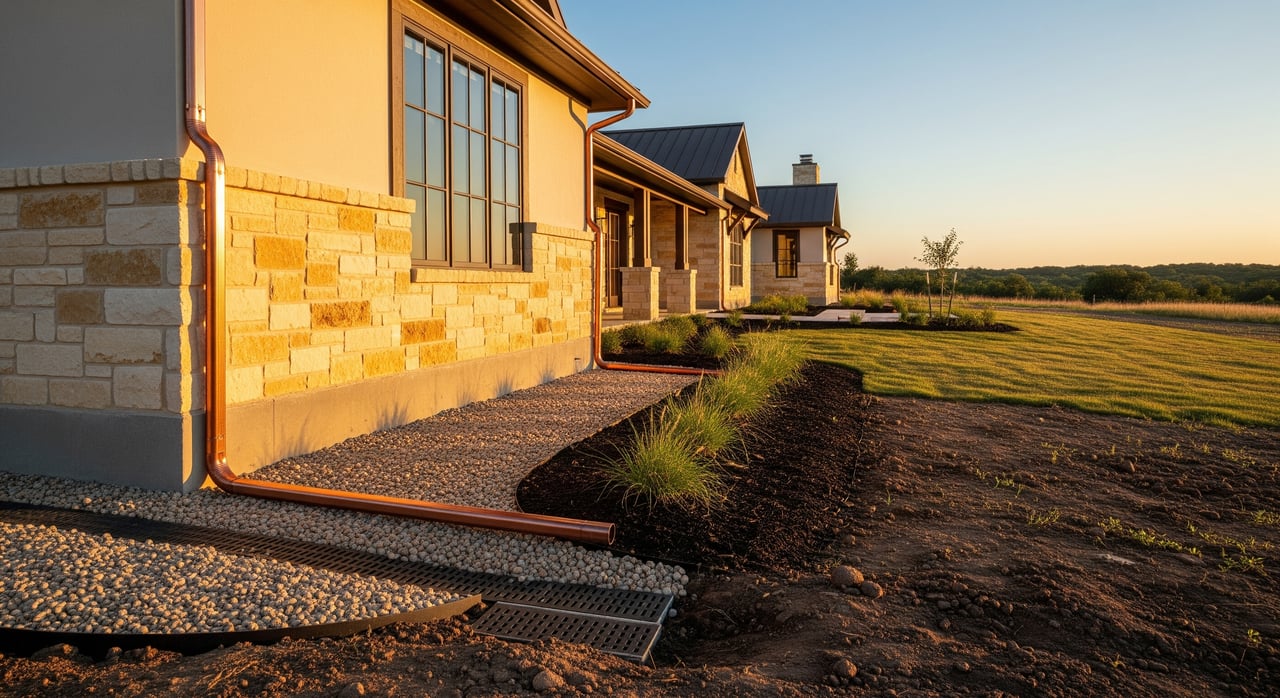
Manage water well. Grade the site to move water away from the foundation with at least a 2 percent slope. Size gutters and downspouts for heavy rain, and design splash pads or drains to protect soil and driveways from erosion.
Utilities and rural systems
Water and septic
Private wells must be sited to meet setbacks, especially relative to septic systems. On-site sewage facilities depend on soil conditions, lot size, and the type of system. If a conventional system is not possible, an aerobic treatment unit or alternative system may be required. Early site evaluations save time and cost.
Electrical and HVAC
Verify service availability and transformer capacity with the local utility. Many shop-houses use 200 amp service, with 400 amp considered where you have heavy equipment, EV charging, or future expansions. Choose HVAC systems that can handle dehumidification and zoning for shop versus living spaces.
Propane, EV readiness, and solar
Where natural gas is not available, propane can support heating or backup generation. Prewire for EV chargers at the shop or garage. If you are considering solar, choose roof orientations that support south-facing arrays and ensure the structure is designed for mounting loads and future interconnection.
Resale, financing, and insurance
Some lenders and appraisers prefer conventional residential standards, permanent foundations, and well-documented plans for nontraditional structures. If you plan to finance, talk to lenders early about requirements for barndominiums, including appraiser comparables and any certifications they may need.
Insurance premiums can reflect wind, hail, fire, and rural location risks. Get multiple quotes and confirm coverage for the shop and its contents. Check flood maps if you are near low-lying areas. Around the home, use defensible space practices and noncombustible materials near the structure to reduce wildfire risk.
Budget and schedule reality
The biggest cost drivers include site preparation, foundation design, structural system choice, HVAC and electrical capacity, septic and well installation, and the level of interior finishes. Permit reviews, septic approvals, and utility extensions can impact timing. Build extra time into your plan for site evaluations and approvals before you mobilize a crew.
Axtell-ready design checklist
Use this simple checklist to keep your project on track:
- Verify jurisdiction, adopted code versions, and permit requirements.
- Order a soil and septic site evaluation and map well and septic setbacks.
- Plan shop-to-home separation, mudroom, and a clean circulation path.
- Right-size HVAC for hot-humid conditions and include dehumidification.
- Choose exterior assemblies that manage condensation and provide a thermal break.
- Design slab thickness for the heaviest use area you expect.
- Confirm electrical service size, 240 volt circuits, and any 3-phase needs.
- Map driveway access, turning space, drainage, and downspout discharge.
- Prewire for EV charging and consider future solar readiness.
- Include marketable features like a primary suite, natural light, and covered porches.
How Journey Realty Group can help
Building a barndominium starts with the right land and a plan that fits Axtell’s climate, utilities, and permitting steps. You deserve local guidance that balances your vision with resale and financing realities. As a family-led Waco team, we help you identify suitable parcels, evaluate neighborhood-level considerations, and navigate the purchase process with clear communication.
If you are selling a home or land to make your barndo possible, we pair hands-on service with modern marketing tools, including instant valuations, MLS-integrated search, and polished listing exposure. When you are ready to talk next steps, reach out to the team that knows McLennan County.
Ready to design a barndominium that fits Axtell’s landscape and your daily life? Connect with the local team that treats your goals like our own at Journey Realty Group.
FAQs
What permits do I need to build a barndominium in Axtell?
- You should confirm residential building permits, shop classification, and separate plumbing, electrical, mechanical, septic, and well approvals with McLennan County or the applicable city department.
How should I insulate a metal barndominium in Central Texas?
- Use assemblies with thermal breaks and the right vapor control strategy, target R-38 to R-49 in ceilings and R-13 to R-20 in walls, and pair with tight air sealing and right-sized HVAC that can dehumidify.
How thick should my shop slab be for vehicles or equipment?
- Many shops use around 6 inches with reinforcement, light-use areas may be around 4 inches, and heavy equipment often needs 8 inches or an engineered design based on a soil report.
Do I need a well and septic in rural McLennan County?
- Many rural parcels rely on a private well and an on-site sewage system, so plan early site evaluations to determine system type, setbacks, and whether public water is an option.
Are barndominiums harder to finance near Waco?
- Some lenders may require more documentation for nontraditional structures and prefer conventional residential standards and permanent foundations, so speak with lenders early to confirm requirements.